Cramps but no period usually means something other than menstruation is irritating or contracting tissue in your pelvis: ovulation, a delayed or absent period, hormonal contraception, an ovarian cyst, endometriosis or adenomyosis, or a non-gynaecological cause such as irritable bowel syndrome, constipation or a urinary infection. Early pregnancy is also a common explanation, so a pregnancy test is the sensible first step if pregnancy is possible. Seek same-day assessment for sudden severe pain, pain with fever, fainting or persistent vomiting. If a pregnancy test is positive, report any pelvic pain the same day, and treat one-sided or severe pain, shoulder-tip pain, dizziness or faintness as an emergency.
Having cramps but no period is unsettling, and it is one of the most common reasons women ask for an appointment. The short answer is that cramping is a muscle and nerve signal, not a menstrual signal. Several organs sit close together in the pelvis — the uterus, the ovaries and tubes, the bowel, the bladder, the pelvic floor muscles and the abdominal wall — and all of them can produce the same dull, pulling, squeezing ache low in the abdomen. So cramps without bleeding do not automatically mean something is wrong with your womb, and they do not automatically mean you are pregnant.
This article works through the causes in roughly the order a doctor thinks about them: pregnancy, a delayed period, ovulation, hormonal contraception, ovarian cysts, endometriosis and adenomyosis, infection, and the non-gynaecological causes that are easy to miss. It also sets out the symptoms that mean you should be assessed the same day rather than waiting, and what a proper assessment involves, so you know what to expect when you come in. This is general information rather than a diagnosis for your own situation. If your pain is severe, getting worse, or frightening you, arrange to be seen now rather than reading further.
What cramps without a period actually tell you
A cramp means a hollow or muscular structure is contracting, stretching or inflamed. The uterus is a muscle and it contracts throughout the month, not only during a period, which is why you can feel genuine period-like cramping with no bleeding at all. But the same sensation can come from the bowel squeezing stool along, from a bladder that is irritated, from an ovary with a cyst on it, or from a pelvic floor muscle that has been held tight for weeks.
Pain from internal organs is what we call visceral pain, and it is deliberately vague. The nerves supplying the uterus, tubes, bowel and bladder enter the spinal cord at overlapping levels, so the brain receives a signal that says something low down in the middle rather than something precise. That is why a bowel problem can feel exactly like a womb problem, and why you cannot reliably work out the cause from how the pain feels alone.
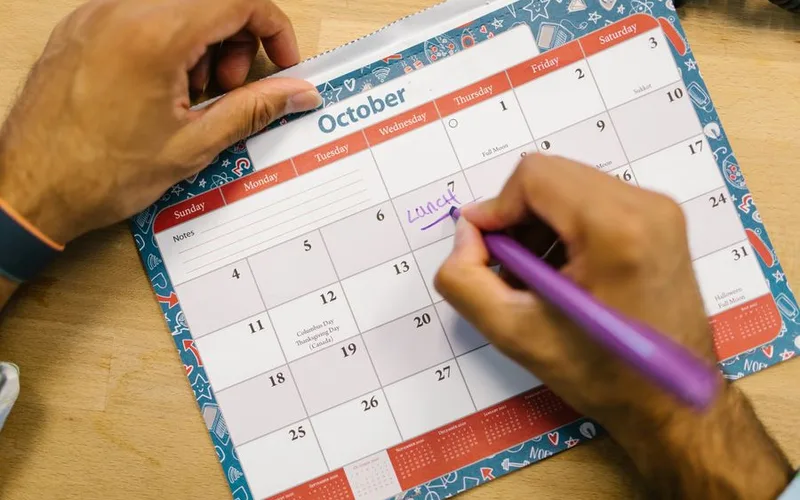
What does help is the pattern. Before your appointment, note a few things down:
- Where the pain sits: central, one side, or shifting
- When in your cycle it comes, counting from the first day of your last real bleed
- How long each episode lasts: minutes, hours, or days
- Whether it changes with opening your bowels, passing urine, eating, movement or sex
- What else happens alongside it: discharge, nausea, bloating, fever, spotting
Two weeks of notes often narrows the possibilities more than any single test, because it separates cramping that follows your hormones from cramping that follows your bowel, your bladder or your activity. A note on your phone is enough; it does not need to be elaborate, and the dates matter more than the detail.
Why do I have cramps but no period? The common causes
The honest answer is that there is no single cause — but the realistic list is shorter than the internet suggests, and most women fall into one of four groups.
Cycle-related causes
Ovulation pain, the build-up of the second half of the cycle, a period that is simply late, a cycle in which you did not ovulate at all, early pregnancy, and the absent or very light bleeds caused by hormonal contraception. These are by far the largest group and most are harmless.
Structural causes
An ovarian cyst, fibroids, uterine polyps, adenomyosis, endometriosis, scar tissue from previous surgery or infection, and — much less often — an obstruction that stops menstrual blood leaving. These tend to produce pain with a pattern that repeats and slowly changes over months.
Inflammatory and infective causes
Pelvic inflammatory disease, a urinary tract infection, appendicitis, and bowel inflammation. These usually bring extra signals with them: fever, abnormal discharge, burning on passing urine, diarrhoea, or pain that escalates over hours rather than weeks.
Causes outside the reproductive organs
Irritable bowel syndrome, constipation, coeliac disease, inflammatory bowel disease, bladder pain syndrome, hernias, pelvic floor muscle spasm and abdominal wall or musculoskeletal pain. In my experience this group is the one most often missed, because once a woman has pelvic pain she assumes it must be gynaecological, and so sometimes do her doctors.
Two practical points. First, if pregnancy is at all possible, test before going any further down the list — it changes the urgency of everything else. Second, more than one cause can run at the same time. It is entirely possible to have mild endometriosis and an irritable bowel, and treating only one will leave you still in pain.
Could you be pregnant? Early pregnancy versus a delayed period
If there is any chance of pregnancy, do a urine pregnancy test before worrying about anything else. Mild, intermittent cramping low in the abdomen is common in very early pregnancy as the uterus begins to change, and for many women it feels indistinguishable from the cramps they get before a period. The cramping alone cannot tell you which it is. Only a test can.
Home urine tests detect the pregnancy hormone hCG and are reliable from around the time your period is due. Earlier than that, hCG may still be below the level the test can pick up, so a negative result on day 24 of your cycle means very little. If the test is negative and your period still has not arrived after a week, repeat it. If you are testing in the evening after drinking a lot of fluid, the urine can be dilute enough to weaken a true positive, so repeat with the first urine of the morning.
Some women notice light spotting around the time implantation occurs, roughly a week to twelve days after ovulation, which can be confused with a very short period. If you are trying to work out whether a brief episode of bleeding was a period or something else, this guide to implantation bleeding and how it differs from a period sets out the differences in timing, colour and duration.
Now the part about urgency, because this is where advice on the internet becomes contradictory. Any pelvic pain with a positive pregnancy test should be reported to a doctor the same day, even when the pain is mild and intermittent, so that someone who knows your dates can decide whether you need a scan or a blood test. Mild cramping in early pregnancy is usually nothing, but that judgement is not one to make alone at home.
It becomes an emergency — go to urgent care rather than waiting for a call back — if a positive test is combined with pain on one side, severe pain, pain in the tip of your shoulder, dizziness or faintness, pain on opening your bowels, or vaginal bleeding. An ectopic pregnancy presents exactly like this, and it can be quiet in its early stages and serious within hours. Do not wait to see whether it settles.
Period cramps but no period when you are not pregnant
If the test is negative and the period is late, the most likely explanation is that you did not ovulate on schedule this cycle. Ovulation is what sets the clock for a period roughly two weeks later. When ovulation is delayed or skipped, the period is delayed or skipped with it — but the uterus and pelvis still generate sensation, so you can feel the familiar pre-period heaviness and cramping with nothing following it.
Ovulation is easily disrupted by ordinary life: a stressful few weeks, a significant change in weight in either direction, a sharp increase in training load, an illness or infection, a course of certain medications, long-haul travel, or shift work that scrambles sleep. These cycles usually sort themselves out, and the period arrives late rather than never.
Beyond that, there are medical reasons for cycles to become unpredictable: an under- or over-active thyroid, a raised prolactin level, polycystic ovary syndrome, the approach of menopause from the mid-forties onward, the months after stopping hormonal contraception, and breastfeeding. Each has its own extra clues — weight or temperature changes, hair or skin changes, milky nipple discharge, hot flushes — which is why the history matters more than any single blood test. If your cycles have been unreliable for some time rather than just this month, this detailed look at what causes irregular periods and when to investigate covers each of these in turn.
As a rough rule: one late or missed period with mild cramps and a negative test needs nothing more than a repeat test and some patience. Three or more missed periods, or cycles consistently longer than about 35 days, deserves assessment — not because it is dangerous in the short term, but because in cycles where ovulation does not happen the lining of the uterus is exposed to oestrogen without the balancing effect of progesterone, and over months and years that can allow the lining to thicken abnormally. A persistent hormonal cause is also worth identifying for its own sake, since it often has implications for fertility, bone health and cardiovascular risk. Importantly, none of this applies to absent bleeding caused by hormonal contraception: those methods keep the lining thin, so having no periods on them is harmless and needs no treatment to bring bleeding back.
Ovulation pain (mittelschmerz): cramps in the middle of your cycle
If your cramps arrive roughly in the middle of your cycle, around a fortnight before the next period is due, the most likely cause is ovulation itself. The old German term for it, mittelschmerz, simply means middle pain.
It has a recognisable signature. The pain is usually on one side rather than central, because only one ovary releases an egg in a given cycle. It can swap sides from month to month. It may be a dull ache building over a day or a brief sharp twinge, and it typically lasts a few hours up to a day or two — not a week. Many women also notice clear, stretchy, egg-white discharge in the same few days, a very small amount of spotting, breast tenderness, or a brief rise in libido. The whole pattern is described more fully in this guide to the signs of ovulation and how to recognise your fertile window.
Why it hurts is straightforward. The follicle containing the egg swells to around two centimetres before it ruptures, stretching the surface of the ovary, and the small amount of fluid and blood released at ovulation irritates the lining of the abdomen. Both of those are normal events, which is why ovulation pain needs no treatment beyond heat and simple pain relief if it bothers you.
It is worth knowing that ovulation pain does not happen every month for everyone, and that it disappears entirely on methods that stop ovulation, such as the combined pill or the implant. If you have mid-cycle pain while taking a method that suppresses ovulation, the pain is coming from something else and deserves a different explanation.
What should prompt a review is a change in character. Ovulation pain that becomes severe enough to stop you working, lasts more than two or three days, is accompanied by fever or vomiting, or is reliably always on the same side and getting worse month by month, is worth imaging — because an ovarian cyst, endometriosis affecting that ovary, or a tube problem can mimic it closely.
Period cramps but no blood: when the bleeding is absent or cannot get out
Having all the sensations of a period with no bleeding at all is a specific pattern, and it falls into two very different categories: there is nothing to shed, or there is something to shed and it cannot get out.
Nothing to shed
This is the common and usually reassuring version. Hormonal contraception thins the lining of the uterus, and with a hormonal coil, an implant, the injection, the progestogen-only pill, or a combined pill taken continuously without a break, many women stop bleeding altogether while still feeling occasional cramping. Cycles in which ovulation did not happen do the same thing: the lining never built up enough to shed, so the sensation arrives without the bleed.
On a hormonal method, cramping is usually not a sign that the method is failing — but there are two safety nets I want you to keep. First, no method is perfect, so if pregnancy is at all possible, do a pregnancy test; cramping does not exclude pregnancy, and when a pregnancy does occur with a coil in place, the proportion that sit outside the uterus is higher than usual. Pain with a positive test needs same-day assessment. Second, new, persistent or severe cramping with a coil in situ deserves a review rather than watchful waiting, because the device can sit low in the cavity or be partly expelled, and cramping with fever, abnormal discharge or deep pain during sex in the weeks after insertion can mean a pelvic infection. A quick examination and, if needed, an ultrasound settles the question.
Longstanding, unchanged discomfort after the menopause may also be benign. But new or worsening pelvic pain after the menopause always needs assessment, because the likely causes change once periods have stopped, and ovarian problems can present this quietly. That is one of the red flags listed later in this article, and it is not a situation for watching and waiting.
Something to shed that cannot get out
This is uncommon but important, because it is the one version that needs active management. Menstrual blood can be obstructed if the cervical canal has narrowed — most often after treatment to the cervix such as a loop excision or cone biopsy, occasionally after repeated procedures — or if scar tissue has formed inside the uterine cavity following surgery or an infection, a condition known as Asherman syndrome. In adolescents, a developmental difference such as an imperforate hymen or a vaginal septum can block the outflow completely.
The tell-tale pattern is cyclical, progressively worsening cramping that comes at regular monthly intervals with no bleeding whatsoever, sometimes with a feeling of fullness or pressure. If that describes you, ask specifically for a pelvic ultrasound. Blood collecting behind an obstruction is visible on imaging, and the problem is treatable — but it will not resolve on its own, and the pain tends to get worse with each cycle rather than better.
Lower abdominal cramps but no period: the gynaecological causes to rule out
When cramping low in the abdomen keeps happening and the cycle explanation does not fit, these are the conditions a gynaecologist looks for.
Ovarian cysts
Most ovarian cysts are functional — ordinary structures left behind after ovulation — and they come and go silently. They cause pain when they grow large enough to stretch the ovary, bleed into themselves, or rupture. Pain from a cyst is typically one-sided, can be a persistent dull ache or a sudden sharp pain, and may be worse with exercise or sex. This overview of ovarian cyst symptoms and when they need attention explains which cysts are simply watched and which are acted on. The emergency version is ovarian torsion, where the ovary twists on its blood supply: sudden severe one-sided pain with nausea and vomiting, which needs surgical assessment within hours.
Endometriosis and adenomyosis
Endometriosis is tissue similar to the uterine lining growing outside the uterus. It affects roughly one in ten women of reproductive age and classically causes pain that started as bad periods and gradually spread into the rest of the month — including cramping on days with no bleeding. Deep pain with sex, pain on opening the bowels around the time of a period, bladder pain and heavy fatigue are all part of the picture. If this sounds familiar, this account of what endometriosis actually feels like day to day is a useful comparison. Adenomyosis, where that tissue grows within the muscle of the uterus itself, causes a heavier, more bruised central cramping.
Fibroids, polyps and scar tissue
Fibroids and polyps more often cause heavy or irregular bleeding than isolated cramping, but a large fibroid creates pressure and dragging discomfort, and a fibroid that outgrows its blood supply can hurt sharply for days. Adhesions following previous pelvic surgery, a caesarean section, or past infection can tether organs together and produce pulling pain with movement.
Pelvic inflammatory disease
Infection ascending from the cervix causes cramping with abnormal or offensive discharge, pain deep inside during sex, bleeding between periods, and sometimes fever. It is treatable with antibiotics, but it is worth being seen promptly rather than waiting, because untreated inflammation can damage the fallopian tubes. Swabs are simple and quick, and treating a partner at the same time is part of the management.
Cramps but no period yet: cramping before a first period
This question comes mainly from teenagers and their parents, because cramping that arrives before any period has ever happened is a different question from a period that is a week late. I will deal briefly with the late period first, then spend the rest of this section on the adolescent version.
If your period is simply late
A cycle length anywhere between about 21 and 35 days is normal, and most women's cycles vary by a few days from month to month rather than running like clockwork, so cramping in the days before a late period usually just means the timing has shifted. If pregnancy is possible, follow the testing steps above; if your cycles have been unpredictable for months rather than this once, the assessment described earlier in this article applies.
Cramping before a first period
Girls often feel cramping, bloating and breast tenderness for several months before menstruation actually starts, as the hormonal cycle begins turning over before the first bleed appears. Breast development usually begins a couple of years before periods do, and a clear or white vaginal discharge often appears in the months beforehand as well. Cramping in that window is normal and does not need investigation on its own.
The first two years after the first period are also commonly irregular, because ovulation is not yet reliable from month to month. Cycles that are long, short or unpredictable in that period are usually the system settling rather than a sign of disease, and a teenager who cramps without bleeding one month and bleeds normally the next is almost always fine.
What does need review is any of the following: no periods by the age of around 15 to 16 despite normal breast and pubic hair development, no signs of puberty at all by about 13, periods that have started and then stopped for several months, or — most importantly in this context — regular monthly episodes of increasingly severe cramping with no bleeding ever having occurred. That last pattern suggests an outflow obstruction and deserves an ultrasound rather than reassurance. It is a straightforward thing to look for and a treatable thing to find, and an examination under the care of someone used to adolescents is usually brief and does not need to be internal.
Severe cramping in the first years of periods that stops a teenager attending school is also not something to simply endure. Period pain in adolescence is often dismissed as part of growing up, and endometriosis can begin in the teenage years; pain that does not respond to simple measures, or that is getting worse year on year, deserves to be taken as seriously as it would be in an adult.
When the cramps are not gynaecological at all
If your cramps have no relationship to your cycle, this group deserves as much attention as the gynaecological causes — and often more.
Irritable bowel syndrome and constipation
Irritable bowel syndrome is common and routinely mistaken for a womb problem. The clues are that the pain is linked to your bowel habit — it eases after opening your bowels or passing wind, it comes with bloating that worsens through the day, and the stool pattern alternates between loose and hard. Simple constipation does the same thing on a smaller scale. One practical test: keep a note of bowel movements alongside your pain for two weeks. If the pain tracks your bowel rather than your cycle, that is your answer. Coeliac disease and inflammatory bowel disease sit in the same group and are worth excluding if there is weight loss, blood in the stool, night-time diarrhoea or a family history.
Urinary causes
A urinary tract infection causes low central cramping with burning on passing urine, needing to go frequently and urgently, and sometimes cloudy or strong-smelling urine. If there is also fever, shivering, vomiting or pain in the flank or back, the infection may have reached the kidney and needs same-day treatment. Bladder pain syndrome, where the bladder is painful without infection, produces cramping that worsens as the bladder fills and eases briefly after emptying.
Muscles, nerves and the abdominal wall
Pelvic floor muscle spasm causes a deep, aching cramp that is worse after prolonged sitting, worse with stress and often worse with sex. Abdominal wall pain is more superficial, reproducible by pressing one specific spot, and worse when you tense your stomach muscles — for example sitting up from lying. Both respond to physiotherapy rather than hormones, which is why identifying them matters.
Appendicitis and hernias
Appendicitis classically begins as central cramping that settles into the lower right abdomen over several hours, with loss of appetite, nausea and a low fever. An inguinal or femoral hernia causes dragging groin pain worse on lifting or coughing. Both are surgical problems and both need assessment rather than observation.
Red flags: cramps that need same-day assessment
Most cramping without a period is not dangerous. A small number of presentations are, and these are the ones I want you to recognise without hesitation. Seek urgent medical assessment the same day — emergency care, not a routine appointment — if you have any of the following:
- A positive pregnancy test with pain on one side, severe pain, shoulder-tip pain, dizziness, faintness, bleeding, or pain on opening your bowels
- Sudden severe pain that starts within minutes and is unlike anything you have had before
- Pain with fever, shivering or feeling generally very unwell
- Fainting, feeling faint on standing, a racing heart, or clammy pale skin
- Persistent vomiting, or being unable to keep fluids down
- An abdomen that is rigid, or so tender that you cannot bear to be touched or to move
- Pain with heavy vaginal bleeding, or with offensive discharge
- New severe pain following any gynaecological procedure or surgery
- New pelvic pain after the menopause, or pain with unexplained weight loss
Separately from that list: if your pregnancy test is positive and you have any pelvic pain at all, even mild, contact your doctor or maternity service the same day so someone can decide whether you need to be seen. The features in the first bullet point turn that from a same-day call into an emergency.
Two entries deserve emphasis. The first is pregnancy with one-sided pain: an ectopic pregnancy can be subtle in its early stages and serious within hours, and the symptoms worth knowing in advance are set out in this guide to early ectopic pregnancy symptoms and when they appear. The second is sudden severe one-sided pain with vomiting, which can mean a twisted ovary. Both are time-sensitive, and in both the right action is to be assessed rather than to wait and see.
Short of these, pain that is steadily worsening week by week, waking you at night, or stopping you working or studying is not an emergency but is not something to tolerate either. Persistent pain is a reason to be investigated, even when every individual day feels manageable.
How the cause is worked out in clinic
Knowing what an assessment involves makes it easier to come in, so here is the sequence.
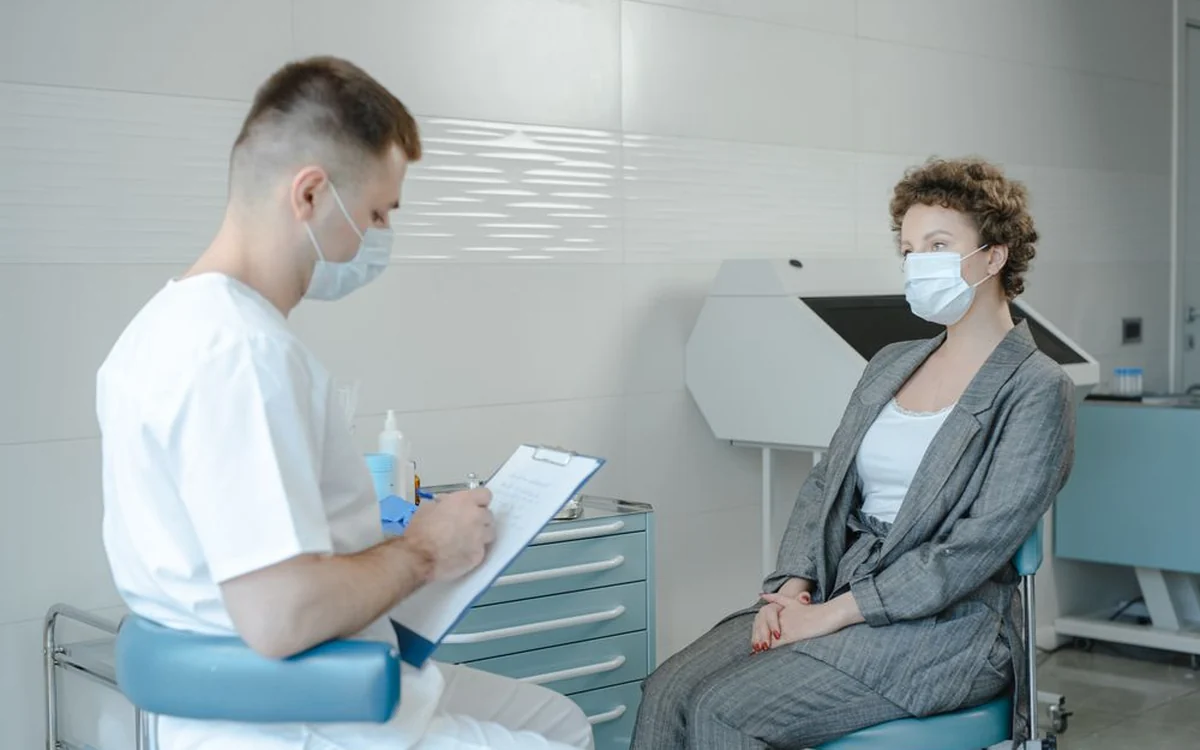
It starts with the history, which carries more diagnostic weight than anything else. Expect questions about the timing and site of the pain, your cycle dates, bleeding pattern, bowel and bladder habits, pain with sex, contraception, previous surgery, previous infections, and whether you are hoping to conceive. If you have kept a two-week diary, bring it.
A pregnancy test comes next whenever pregnancy is possible, regardless of what you have done at home. Then an examination: feeling the abdomen to locate tenderness and any mass, and usually an internal examination to assess the cervix, the size and mobility of the uterus, and tenderness in the areas where the ovaries and tubes sit. Swabs are taken if infection is a possibility, and a urine sample if bladder symptoms are present. You can ask for the examination to be explained step by step, ask for a chaperone, and stop at any point.
Imaging means a pelvic ultrasound, and where possible a transvaginal scan, because it gives a far clearer view of the ovaries and the lining of the uterus than a scan through the abdominal wall. It will show cysts, fibroids, polyps, free fluid, endometriomas, adenomyosis and blood collecting behind an obstruction. It is important to understand its limit: a normal ultrasound does not exclude superficial endometriosis or adhesions, and being told the scan is clear does not mean your pain has no cause.
Blood tests are chosen to answer specific questions rather than ordered as a panel: a full blood count and inflammatory markers if infection is suspected, thyroid function and prolactin if periods have stopped, and hormone tests if the cycle itself is the issue. Timing matters for some of these, which is why you may be asked to come back on a particular day of your cycle rather than having everything taken at once.
If the history strongly suggests endometriosis or adhesions and imaging is normal, a diagnostic laparoscopy may be discussed — a keyhole look inside the pelvis that both diagnoses and, in the same operation, allows treatment of what is found. It is a decision made together, weighing how much the pain is affecting your life against the fact that it is an operation under general anaesthetic, and it is rarely the first step.
What helps while you are waiting for answers
None of this replaces a diagnosis, but there is a lot you can do between now and your appointment.
Heat is genuinely effective for cramping, whether from a hot water bottle, a heat patch or a warm bath, because it relaxes smooth muscle and increases local blood flow. Simple pain relief helps too. Anti-inflammatory painkillers work on cramping by reducing the prostaglandins that drive uterine contraction, and they are most useful taken with food at the first sign of pain rather than once it is established. They are not suitable for everyone — avoid them if you have a history of stomach ulcers, kidney problems, or asthma made worse by this class of medicine — and if there is any chance you are pregnant, paracetamol is the appropriate choice and anti-inflammatories are best avoided. If you are unsure which applies to you, ask a pharmacist or your doctor rather than guessing.
Beyond medication, the measures with the best evidence behind them are unglamorous: regular gentle movement such as walking, stretching or yoga, which eases both pelvic floor tension and bowel sluggishness; enough fluid and fibre to keep bowel habit regular, since constipation amplifies every other source of pelvic pain; and protecting sleep, because pain tolerance drops sharply when you are short of it.
If the cramping seems to follow stress or long periods of sitting, it is worth trying deliberate relaxation of the pelvic floor rather than more tightening exercises — slow breathing with the lower abdomen soft, a few minutes at a time. Women who have been doing pelvic floor squeezes for a tense, painful pelvic floor often feel worse rather than better, and a pelvic health physiotherapist can tell the difference.
Keep the diary going. It is the single most useful thing you can bring to the consultation, and it also tells you something while you wait — whether the pattern is settling or building.
Finally, do not let a long wait or a normal scan convince you to stop asking. Pelvic pain in women is under-investigated, and the gap between first symptom and diagnosis for conditions like endometriosis remains measured in years rather than months. If your pain is interfering with your work, your studies, your relationships or your sleep, that is reason enough to be assessed properly — and if you have been told everything is normal but nothing has changed, asking for a second look is a reasonable thing to do, not a difficult one.
References
The following current and independent health sources were used in preparing this article.
- NHS. Period pain
- NHS. Ectopic pregnancy
- NICE. Endometriosis: diagnosis and management (NG73)
- MedlinePlus. Period Pain