
Women's Health
Protecting your health at every stage through regular follow-up and early diagnosis.
Learn moreBy your side from the very first day to birth, for the health of mother and baby.
Pregnancy follow-up covers the regular examinations, ultrasound and screening tests carried out throughout pregnancy to monitor the health of mother and baby. Check-ups, usually every 4-6 weeks, become more frequent later in pregnancy. Regular follow-up allows possible risks to be noticed early and makes a safe birth possible.
Pregnancy is a special and delicate period for every woman. Regular follow-up protects the mother's health while monitoring the baby's development step by step and catching possible problems early.
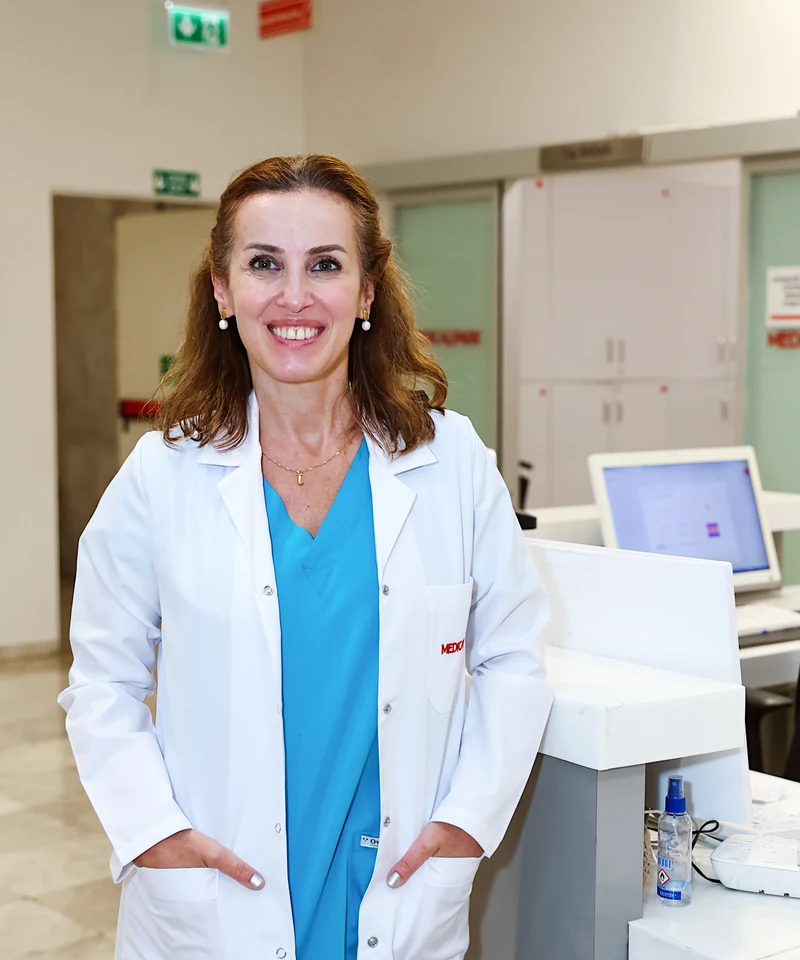
Op. Dr. Ayşet Jane Özcan offers expectant mothers detailed follow-up, accurate information and reassuring support from the first week of pregnancy to birth. The aim is to help you experience this special journey both safely and peacefully.
On this page you will find, in detail, what pregnancy follow-up involves, which tests are used, what a high-risk pregnancy means and the process of preparing for birth.
Throughout pregnancy the health of mother and baby continuously changes and develops. Regular follow-up confirms that these changes are progressing normally and allows any deviation to be noticed early. The great majority of problems detected early can be managed safely with appropriate care.
Follow-up is not only a physical check; it is also a process in which the expectant mother can ask questions, access accurate information and feel safe. This emotional support is at least as important for a healthy pregnancy as the medical follow-up.
Advice on nutrition, weight gain, exercise and lifestyle is also part of follow-up and directly benefits the health of both mother and baby.
Pregnancy follow-up is part of a planned process that runs from the early weeks of pregnancy to birth. At each check-up the condition of mother and baby is assessed and the next step is planned. The main assessments in follow-up are:
These assessments aim to safeguard the health of mother and baby at every stage of pregnancy.
Pregnancy is divided into three periods (trimesters), and each has its own priorities. In the first trimester (weeks 0-13), confirming that the pregnancy has started healthily, folic-acid support and the first screening tests come to the fore.
In the second trimester (weeks 14-27), the baby's organ development is assessed with a detailed ultrasound, along with screening tests and the gestational-diabetes check. This is usually the period when the mother feels best.
In the third trimester (from week 28 to birth), the baby's growth and position and the mother's preparation for birth are monitored. Check-ups become more frequent in this period and the birth plan is finalised.
Some pregnancies have features that require extra attention for the mother or baby and are considered 'high-risk'. This does not mean the pregnancy will end badly; it simply requires closer follow-up and some additional precautions.
The main situations that can lead to a high-risk pregnancy are:
In these situations, follow-up becomes more frequent and the necessary precautions are taken. Most risks detected early are managed safely with appropriate care.
The mode of birth (vaginal delivery or caesarean) is decided together, according to the condition of mother and baby. Each method has its own advantages and reasons; the aim is always the safest possible birth.
Check-ups in the final weeks, taking into account the baby's position and size and the mother's health, help make the most accurate decision about the timing and method of birth.
Preparing for birth includes not only medical planning but also informing the expectant mother and helping her feel psychologically ready. Answering your questions and easing your concerns is our priority during this process.
A healthy pregnancy is closely linked to a balanced diet and a regular lifestyle. A diet with enough protein, vegetables, fruit and whole grains both preserves the mother's energy and supports the baby's development. Avoiding highly processed foods and excess sugar is recommended.
Folic acid is especially important before and in early pregnancy for the development of the baby's nervous system. Iron and, when needed, vitamin D support may be added later. However, every supplement is individual and should only be used on your doctor's advice.
In uncomplicated pregnancies, with your doctor's approval, walking and light exercise are generally beneficial. Enough sleep, staying away from smoking and alcohol and managing stress are also cornerstones of a healthy pregnancy.
Throughout pregnancy, many women may experience nausea, fatigue, heartburn, back pain or swelling in the legs. Most of these are changes belonging to the normal course of pregnancy and can be eased with simple measures.
That said, some symptoms require closer evaluation. In situations such as severe headache, changes in vision, sudden and marked swelling, abdominal pain or reduced baby movements, it is important to contact your doctor without delay.
Knowing which symptom is normal and which requires attention helps expectant mothers feel safer. For this reason, at every check-up the symptoms specific to that period and what to watch for are shared with you.
Our pregnancy follow-up approach aims to offer medical safety and emotional support together. Every pregnancy is unique; the follow-up plan is therefore created individually according to the mother's health, history and the course of pregnancy.
Expertise and experience in Obstetrics and Gynecology provide safe management in both low-risk pregnancies and those requiring close follow-up. Appropriately addressing risks detected early is the basis of a healthy pregnancy and a safe birth.
From the first week to birth, answering your questions, easing your concerns and giving you confidence are our priority. Being by your side on this special journey is the most valuable part of our approach.
One of the most important parts of pregnancy follow-up is the screening tests that assess the health of mother and baby. These tests identify possible risks early and allow the necessary precautions to be taken in time. Each test is recommended at a specific week of pregnancy.
In the first trimester, the combined test and nuchal translucency (NT) measurement assess the risk of certain chromosomal conditions in the baby. In the second trimester, a triple or quad test and a detailed ultrasound are performed. The detailed ultrasound is an important assessment that examines the baby's organ development thoroughly.
Advanced screening tests from the mother's blood (NIPT) can provide highly accurate information for certain chromosomal conditions. Which tests are suitable for you is determined by considering your age, history and previous test results.
Screening tests are a risk assessment, not a diagnosis. Interpreting the results correctly and planning advanced tests when needed is a sensitive process that should be carried out with an experienced physician. We value conveying accurate information to you in plain language throughout this process.
Ultrasound is one of the most valuable tools in pregnancy follow-up. Because it is based on sound waves and contains no radiation, it is safe for mother and baby. It is used for different purposes at different stages of pregnancy.
In the early weeks it confirms that the pregnancy is inside the uterus and viable; later it monitors the baby's development, organs and heartbeat. The detailed ultrasound in the second trimester in particular is an important check that assesses the baby's organ development thoroughly.
Ultrasound findings are interpreted together with other tests to confirm that the pregnancy is progressing healthily and to plan early intervention when needed.
Weight gain in pregnancy is natural and necessary, but it is important that it is adequate and balanced. Gaining too little or too much can affect the health of both mother and baby. The appropriate range of weight gain is individual, based on the mother's pre-pregnancy situation.
A balanced diet, portion control and, where possible, light physical activity support healthy weight gain. In situations such as gestational diabetes, nutrition becomes even more important. Weight is monitored at each check-up, and advice is updated when needed.
The aim is not strict rules but a sustainable balance that supports the health of mother and baby.
The final weeks of pregnancy are a time of both excitement and preparation. Check-ups become more frequent; the baby's position and size and the mother's health are closely monitored. The birth plan is finalised in light of these findings.
Preparing for birth includes not only medical planning but also informing the expectant mother and helping her feel psychologically ready. How the birth may proceed, when to go to hospital and possible scenarios are discussed in advance.
Answering your questions and easing your concerns during this process helps you prepare for birth with confidence.
Pregnancy is a period of intense emotional change as well as physical change. Joy, excitement, anxiety and uncertainty can be felt together. Knowing that these feelings are normal and finding a space where you can share them is important for a healthy pregnancy.
The expectant mother's mental health is valuable both for her own wellbeing and for the baby's health. Situations such as excessive anxiety, sleep problems or persistent sadness should not be overlooked, and support should be sought when needed.
Regular follow-up is not only a physical check; it is also a process in which the expectant mother can ask questions, access accurate information and feel safe. This emotional support is as important as the medical follow-up.
Being by your side on this special journey, easing your concerns and giving you confidence is one of the most valuable parts of our approach.
In an uncomplicated pregnancy, check-ups are generally recommended every 4-6 weeks in the early months and every 1-2 weeks towards the end. In high-risk situations, your doctor adjusts the frequency.
After a missed period and a positive pregnancy test, the first visit is usually recommended around weeks 6-8. This confirms that the pregnancy is inside the uterus and healthy.
No. The ultrasound used in pregnancy follow-up is based on sound waves and contains no radiation. It is an imaging method used safely for many years.
The mode of birth is determined together, based on the health of mother and baby, the course of pregnancy and findings in the final weeks. The aim is always the safest possible birth.
Folic acid is recommended before and in early pregnancy; iron and, when needed, vitamin D may be added later. However, every supplement is individual and should be used on your doctor's advice.
In uncomplicated pregnancies, with your doctor's approval, walking and light exercise are generally beneficial. In high-risk situations, the level of activity is determined individually.
Gestational diabetes often causes no symptoms but can affect the health of mother and baby. The glucose test is therefore an important screening test recommended at the appropriate weeks.
Protecting your health at every stage through regular follow-up and early diagnosis.
Learn more
A scientific, individual and hopeful approach on your journey to parenthood.
Learn more
One step closer to parenthood with the latest methods and patient-focused care.
Learn moreContact us to book an appointment, learn about your treatment or get an expert opinion.