
Women's Health
Protecting your health at every stage through regular follow-up and early diagnosis.
Learn moreOne step closer to parenthood with the latest methods and patient-focused care.
IVF (in vitro fertilization) is the process of combining egg and sperm in the laboratory and placing the resulting embryo into the uterus. It is used for blocked tubes, severe male factor, reduced ovarian reserve and unexplained infertility. The process consists of ovarian stimulation, egg retrieval, fertilization and embryo transfer.
IVF is today one of the most effective ways for many couples to become parents. Advances in science and laboratory technology have significantly improved the chance of success in suitable patients. Many situations that once seemed hopeless can now be treated successfully.
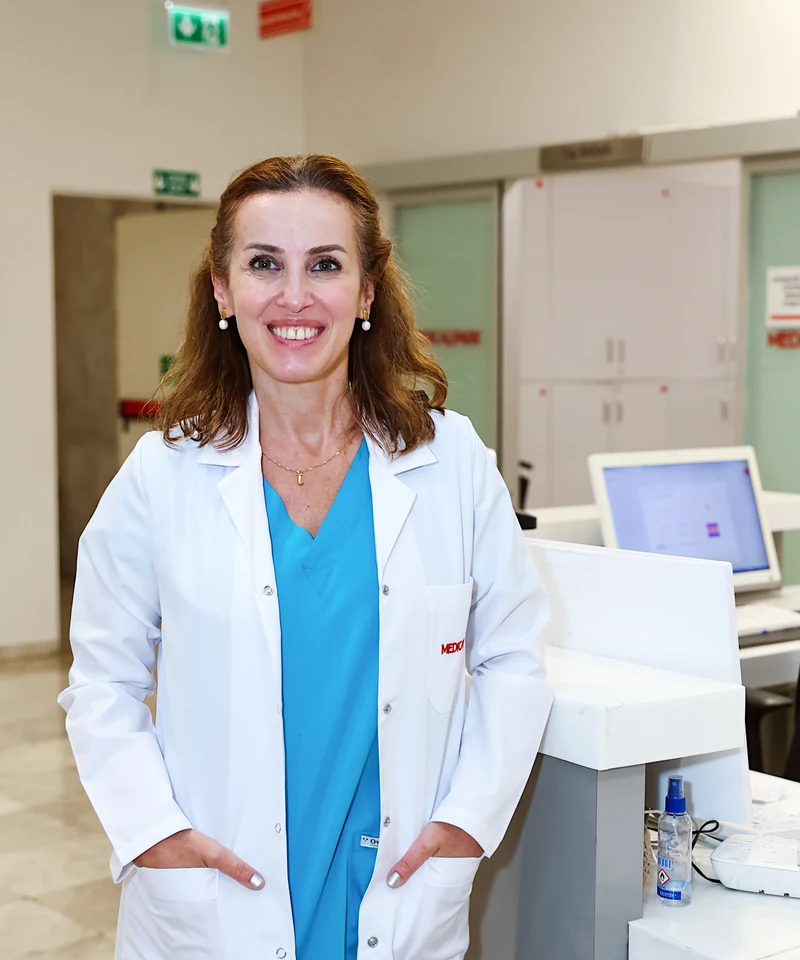
With her academic background in IVF and reproductive medicine, Op. Dr. Ayşet Jane Özcan plans a protocol tailored to each couple. She manages the process with transparent communication, close monitoring and emotional support.
On this page you will find, in detail, who IVF is suitable for, its stages, the factors that affect success and answers to frequently asked questions.
IVF, or in vitro fertilization, is an assisted-reproduction method in which fertilization takes place in the laboratory rather than inside the body. The collected eggs are combined with sperm in the laboratory; the resulting embryo is grown for a few days and then placed into the uterus.
This method is used when pregnancy cannot be achieved naturally or with simpler treatments. It is one of the most effective options, especially when the tubes are blocked, sperm count is very low or ovarian reserve is reduced.
IVF is not a single procedure but a process lasting a few weeks, carefully managed with ultrasound and hormone monitoring. Because each stage affects the success of the next, it requires careful planning.
IVF can be applied for a wide range of infertility causes. The couple's history, previous treatments and test results guide the decision. The following are the most common indications for IVF:
In addition to these indications, IVF may also be considered in situations such as advanced maternal age and recurrent pregnancy loss. Suitability is always decided on an individual basis.
The IVF process consists of consecutive stages, each carefully planned. Understanding the process from start to finish helps patients feel safer and more prepared.
In general, the stages proceed as follows:
In some cases embryos are frozen and transferred in a suitable cycle. This 'frozen embryo transfer' provides flexibility and safety for many patients.
In conventional IVF, egg and sperm are placed side by side in the laboratory and fertilization is allowed to happen on its own. In microinjection (ICSI), a single sperm is injected directly into the egg under a special microscope. This method is preferred especially when male factor is prominent.
The quality of the embryology laboratory is one of the most important determinants of IVF success. Growing the embryos in the right conditions, selecting the healthiest embryo and timing the transfer all require precision.
When creating the treatment plan, whether conventional IVF or ICSI will be used is determined according to the couple's situation and shared with you together with the reasoning.
IVF success depends on many factors, including the woman's age, egg and embryo quality, the condition of the uterine lining and the management of underlying conditions. Rather than giving a fixed percentage, we share a realistic expectation specific to you after your assessment.
The woman's age is the most decisive factor; egg quality and number decline with age. Managing endometriosis, fibroids or intrauterine problems beforehand also improves the chance of success.
Lifestyle should not be overlooked. Stopping smoking, reaching a healthy weight and managing stress all contribute positively to the effectiveness of treatment.
Before treatment begins, the couple is assessed in detail, the necessary tests are completed and an individual protocol is determined. This preparation stage is important for building the process on solid ground.
After embryo transfer, prolonged bed rest is neither necessary nor recommended. You can largely continue your daily life; it is enough to avoid heavy exercise and strenuous activity.
The waiting period before the result can be emotionally intense. Not leaving you alone during this time, answering your questions and offering a realistic perspective are an inseparable part of our approach.
IVF treatment is an emotional journey that begins with hope and excitement and is woven with waiting and uncertainty. Experiencing ups and downs during this process is entirely natural. An environment in which you can express rather than suppress your feelings, and feel understood, contributes positively to both your mental health and your treatment.
The waiting period after embryo transfer in particular is the most challenging stage for many couples. During this time, receiving realistic information, avoiding over-interpretation and having a supportive environment reduces stress. Remember: stress alone is not a cause of failure, but managing it improves your quality of life.
Sharing the responsibility of the process with your partner and seeking professional support when needed makes this journey more bearable. We value being by your side at every step, without leaving you alone.
There are steps that can be taken before starting treatment to improve IVF success. Reaching a healthy weight and adopting a balanced, nourishing diet support egg and sperm quality. These changes contribute to the effectiveness of treatment.
Completely stopping smoking is very important both for egg and sperm quality and for a healthy pregnancy. Limiting alcohol and reducing caffeine intake are also recommended. Folic acid and the vitamin supplements advised by your doctor should not be neglected.
Regular sleep, light exercise and stress-management techniques also contribute positively to the process. This preparation period is an unseen but valuable part of the IVF journey.
Our IVF approach is built on a protocol tailored to each couple, close monitoring and transparent communication. Even two couples with the same diagnosis may have different needs; your treatment plan is therefore determined individually according to your age, ovarian reserve and history.
Academic depth in reproductive medicine and international experience provide a scientific, up-to-date perspective even in complex cases. Decisions such as whether to use conventional IVF or microinjection (ICSI) are shared with you together with the reasoning.
Building realistic expectations, explaining the process in plain language and being emotionally by your side are inseparable parts of our approach. Our aim is to walk this journey with you, in confidence.
In modern IVF practice, freezing and storing healthy embryos that are not transferred (vitrification) is a frequently used method. This can provide more than one transfer chance from a single egg retrieval and allows transfer in a more suitable cycle when needed.
Frozen embryo transfer offers a more flexible and comfortable option than fresh transfer for some patients. Being able to plan the transfer when the uterine lining is most receptive can contribute positively to the chance of success.
These decisions are made individually, considering the number and quality of embryos and the patient's age and general condition. Which method is suitable for you is shared with you together with the reasoning, and the process is planned together.
Before starting IVF, a series of tests is performed to understand the couple's situation clearly. These tests help select the right treatment protocol and address possible obstacles in advance.
In the woman, hormone tests showing ovarian reserve (such as AMH), ultrasound assessment of the uterus and ovaries and, when needed, imaging of the uterine cavity are carried out. In the man, semen analysis is the basic test. General health and infection screening may also be requested for both partners.
This preparation stage builds the treatment on solid ground and positively affects the chance of success.
In modern IVF, healthy embryos that are not transferred can be frozen (vitrification) and stored. This provides more than one transfer chance from a single egg retrieval and allows transfer in a more suitable cycle when needed.
Frozen embryo transfer is a more flexible and comfortable option than fresh transfer for some patients. Being able to plan the transfer when the uterine lining is most receptive can contribute positively to success.
This approach offers timing flexibility during treatment and additional opportunity to evaluate the embryos. Which method is suitable is determined individually for you.
Success depends not only on the medical process but also on general health and lifestyle. A balanced diet, a healthy weight, stopping smoking and limiting alcohol positively affect both egg and sperm quality.
Regular but not excessive physical activity, enough sleep and stress management also contribute. These changes are important steps that support the effectiveness of treatment and in which you can play an active part.
There are many myths about IVF that can cause unnecessary anxiety in couples. For example, the idea that children born through IVF will be 'different' is untrue; IVF only changes the environment in which fertilization takes place.
Another common misconception is the belief that treatment is very painful. In reality, most of the process is painless, and procedures such as egg retrieval are performed under light sedation. The needles used are fine-tipped and easily tolerated by most patients.
It is also a common myth that staying in bed for a long time after embryo transfer improves success; on the contrary, excessive rest is not recommended. You can largely continue daily life.
Accurate information makes the process less anxious and more manageable. Asking every question on your mind and getting information from reliable sources is one of the most valuable steps on this journey.
Most of the treatment is painless. Egg retrieval is performed under light sedation, so no pain is felt. The needles used are fine-tipped and easily tolerated by most patients.
Success depends on the woman's age, egg and embryo quality and the underlying causes, so a single percentage is not meaningful for everyone. After your assessment, a realistic expectation specific to your situation is shared.
No. Prolonged bed rest is neither necessary nor recommended. You can largely continue daily life after transfer; it is enough to avoid heavy exercise and strenuous activity.
In conventional IVF fertilization is allowed to happen on its own, while in ICSI a single sperm is injected directly into the egg. ICSI is preferred especially when male factor is significant. Which is used is decided individually.
A single IVF cycle usually takes 2-3 weeks. This may vary with preparation, tests and the chosen protocol. Your plan is shared in detail at the first consultation.
Yes. Healthy embryos that are not transferred can be frozen and later thawed and transferred in a suitable cycle. This provides flexibility and additional chances of pregnancy for many patients.
Because assessment is done as a couple, it is best to come together as much as possible. A semen analysis is needed for the man, and making decisions together is beneficial both medically and emotionally.
Protecting your health at every stage through regular follow-up and early diagnosis.
Learn more
A scientific, individual and hopeful approach on your journey to parenthood.
Learn more
Small incisions, less pain and a fast return to daily life.
Learn moreContact us to book an appointment, learn about your treatment or get an expert opinion.