
Women's Health
Protecting your health at every stage through regular follow-up and early diagnosis.
Learn moreSmall incisions, less pain and a fast return to daily life.
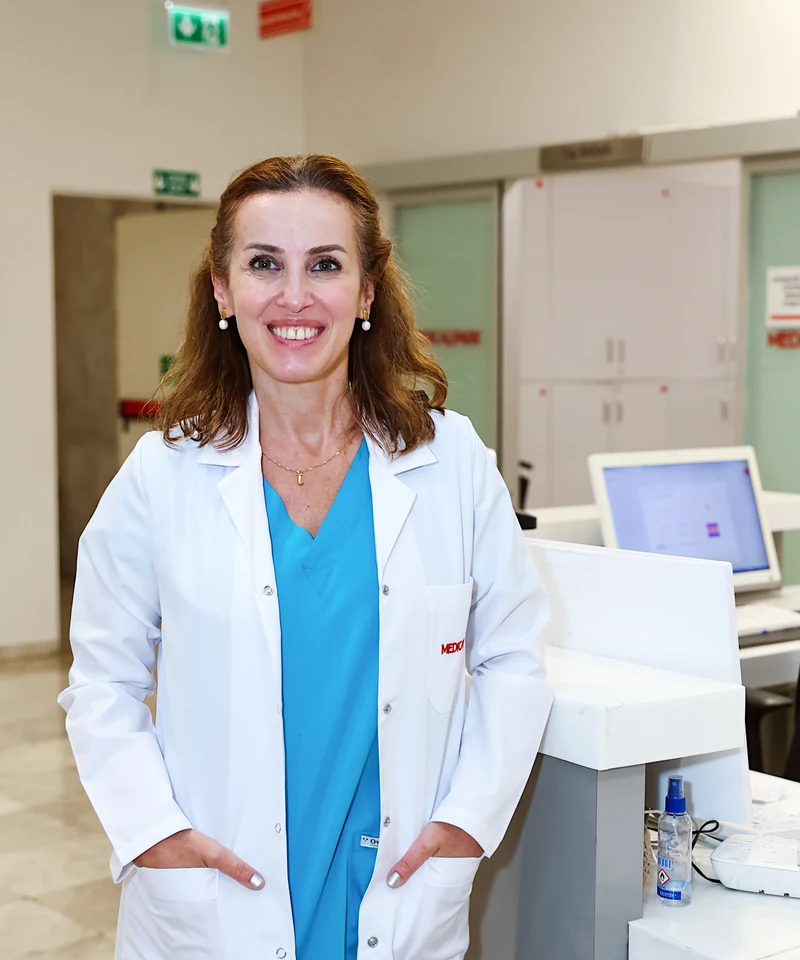
Laparoscopic surgery is a 'keyhole' technique performed through a few millimetre-sized incisions using a camera and fine instruments. It is used for many gynecological conditions such as fibroids, ovarian cysts, endometriosis and ectopic pregnancy, offering less pain, smaller scars and faster recovery than open surgery.
Laparoscopy is one of the most important advances in modern gynecological surgery. Because a few small entry points are used instead of a large incision, patients can usually stand the same day and return to daily life quickly.
With her experience in endoscopic and laparoscopic surgery, Op. Dr. Ayşet Jane Özcan aims to offer the least invasive, most comfortable treatment option for suitable patients. The goal is to treat the condition while preserving the organs and fertility as much as possible.
On this page you will find, in detail, what laparoscopic surgery is, when it is used, its advantages and the recovery process.
Laparoscopic surgery is a minimally invasive method commonly known as 'keyhole surgery'. Through a few millimetre-sized incisions around the navel, a camera (laparoscope) and fine surgical instruments are placed into the abdomen. The surgeon performs the procedure while watching the camera image on a large screen.
During the procedure the abdominal cavity is gently inflated with a sterile gas to widen the view and the working space. This allows the organs to be seen clearly and makes precise surgery possible.
Because no large incision is made, tissue damage is minimal. This means less pain, less bleeding and a much faster recovery.
Laparoscopy can be used in the diagnosis and treatment of many gynecological conditions. The most common situations are:
Which method is used is decided individually according to the type and size of the condition, the patient's general health and pregnancy plans. Not every patient is suitable for laparoscopy; this assessment is made carefully before surgery.
Laparoscopic surgery has many clear advantages over open surgery. These advantages directly affect both post-operative comfort and the time it takes to return to daily life.
Thanks to these advantages, many patients feel well shortly after surgery and return to normal life with confidence.
Uterine fibroids are among the most common benign tumours in women. Laparoscopic myomectomy removes fibroids while preserving the uterus and, in suitable cases, helps protect fertility. This is especially important for women planning pregnancy.
For ovarian cysts, too, laparoscopy allows only the cyst to be removed while preserving healthy ovarian tissue. This 'organ-preserving' approach aims to protect the woman's hormonal balance and reproductive potential.
The decision to operate is made individually, considering the location, size and number of fibroids or cysts and the patient's symptoms. The aim is always to achieve the best result with the least intervention.
Endometriosis is a condition in which tissue similar to the uterine lining settles outside the uterus, and it can cause pain and infertility. Laparoscopy is the gold-standard method both for the definitive diagnosis of endometriosis and for removing the lesions.
Ectopic pregnancy is when a fertilized egg implants outside the uterus, most often in the tube, and it can require urgent intervention. In this situation laparoscopy offers a rapid, tissue-preserving treatment option.
In both conditions, early diagnosis and the right surgical approach are very important both for relieving symptoms and for protecting future fertility.
Recovery after laparoscopic surgery is noticeably faster than after open surgery. Most patients stand within a few hours of the procedure and are usually discharged within 1-2 days.
Return to daily activities is often possible within a few days. For heavy exercise and strenuous activity, you wait the time advised by your doctor. Because the incisions are very small, the scars fade noticeably over time.
What you should do and watch out for during recovery is explained to you in detail after surgery. Being reachable at every step is a core part of our approach.
Preparing for a laparoscopic operation is important for a safe and comfortable process. Before surgery, the necessary blood tests, imaging and anaesthetic assessment are completed. Your medications, allergies and previous surgeries must always be shared with your doctor.
You will be asked to fast for a certain period before surgery; this is necessary for anaesthetic safety. If you smoke, stopping before surgery speeds recovery and reduces the risk of complications. All of these preparations are explained to you in detail beforehand.
On the day of surgery, the steps of the procedure and what to expect afterwards are reviewed again. Knowing what will be done reduces anxiety; we therefore value providing a setting where you can ask your questions freely.
Recovery after laparoscopic surgery is usually fast, but it is important to allow your body time to heal. In the first days, mild fatigue, tenderness around the incision sites and a temporary sense of bloating from gas in the abdomen are normal; these settle quickly.
Gentle movement and short walks early on support circulation and speed recovery. You should, however, avoid heavy lifting and strenuous exercise for the time advised by your doctor. Paying attention to your nutrition and drinking plenty of water are also helpful during this period.
In situations such as fever, increasing pain, redness at the incision or unexpected discharge, you are advised to contact your doctor without delay. Being reachable at every step of recovery is a core part of our approach.
At the heart of our surgical approach is the principle of 'the best result with the least possible intervention'. For each patient, whether the laparoscopic method is suitable instead of open surgery is carefully assessed, and organ-preserving options are prioritised.
A background at Istanbul Faculty of Medicine, specialty training at Süleymaniye and experience in endoscopic and laparoscopic surgery form the basis of a safe and precise surgical understanding. Especially in patients who need to preserve fertility, the organ-preserving approach is of great importance.
From before surgery to the end of recovery, transparent information, realistic expectations and continuous communication are our priority. We value your making decisions together, with accurate information.
The most basic difference between laparoscopic (keyhole) surgery and traditional open surgery is the size of the incision. In open surgery a large incision is made in the abdomen, while in laparoscopy only a few millimetre-sized entry points are used. This difference directly affects the whole recovery process.
Small incisions mean less tissue damage, less pain and less bleeding. Patients usually stay in hospital for a shorter time and return to daily life much faster. The scar after surgery is also noticeably smaller.
That said, not every patient or situation is suitable for laparoscopy. Very large masses, dense adhesions or certain emergencies may require open surgery. Which method is safest and most suitable for you is determined after a detailed assessment.
Our aim is to prioritise minimally invasive methods in every suitable patient for a comfortable recovery, while making the right surgical decision together with you when safety requires it.
In some situations, both abdominal (laparoscopy) and intrauterine (hysteroscopy) evaluation can be performed in the same session. This combined approach, especially in infertility assessment, allows the uterine cavity, the tubes and the ovaries to be examined together.
Using both methods together means the patient receives a more comprehensive assessment with a single anaesthetic and a single recovery. This offers an advantage in both time and comfort.
Which methods are used is planned individually, considering the patient's history and complaints.
There are simple but effective steps to support recovery after laparoscopic surgery. Drinking plenty of water, eating a balanced, fibre-rich diet and moving gently early on support both general recovery and the return of normal bowel function.
In the first days it is important to avoid heavy, strenuous activity while not remaining completely still. Short walks support circulation and speed recovery. Keeping the incision areas clean and dry is recommended.
Personalised recovery advice is explained in detail after surgery. Being able to reach your doctor with any concern helps the process go safely.
One of the most important advantages of laparoscopic surgery is that it allows fertility-preserving approaches. In conditions such as fibroids, cysts or endometriosis, only the affected area can be removed while preserving healthy tissue.
This is especially important for women planning pregnancy; preserving the uterus and ovaries as much as possible supports future fertility. The decision to operate is always made individually, keeping this goal in mind.
The decision for laparoscopic surgery is based not on a single factor but on evaluating many elements together. The type and size of the condition, the severity of symptoms, the patient's general health and pregnancy plans all play a role.
Not every patient or situation is suitable for laparoscopy. In some cases open surgery may be safer; this assessment is made with the patient's benefit as the priority. The aim is to achieve the safest and most effective result with the least intervention.
The decision process is carried out transparently. Why this method is recommended, what the alternatives are and the possible risks are explained to you in detail. It is important that you make the decision together, with accurate information.
This individual, careful approach is the foundation of our surgical philosophy, which prioritises both safety and treatment success.
Yes. In suitable patients, laparoscopy is a widely used and safe technique worldwide. As with any surgery there are some risks; these are assessed in detail beforehand and shared with you.
Because the incisions are only a few millimetres, the scars are very small and fade noticeably over time. This is one of the key advantages of keyhole surgery.
Most patients can resume light daily activities within a few days. The exact time depends on how physical your work is and the procedure performed; personalised advice is given after surgery.
Laparoscopic myomectomy removes fibroids while preserving the uterus and, in suitable cases, helps protect fertility. The decision is individual, based on the location and size of the fibroid.
Most patients are suitable; however, very large masses, dense adhesions or certain special situations may require open surgery. Suitability is determined by a pre-operative assessment.
The duration varies with the procedure performed and the condition. Simple procedures are short, while complex cases can take longer. The expected duration is shared with you before surgery.
Much less pain is expected than with open surgery. In the first days there may be mild discomfort and a sense of gas bloating; these are usually easily controlled with simple painkillers.
Protecting your health at every stage through regular follow-up and early diagnosis.
Learn more
A scientific, individual and hopeful approach on your journey to parenthood.
Learn more
One step closer to parenthood with the latest methods and patient-focused care.
Learn moreContact us to book an appointment, learn about your treatment or get an expert opinion.