
Women's Health
Protecting your health at every stage through regular follow-up and early diagnosis.
Learn moreA scientific, individual and hopeful approach on your journey to parenthood.
Infertility is the absence of pregnancy after one year of regular, unprotected intercourse (six months if the woman is over 35). The cause may be female, male or both. After a detailed assessment, treatment is planned starting with the least invasive option, ovulation induction, intrauterine insemination (IUI) or IVF.
Being unable to conceive is often a lonely and emotionally difficult experience for couples. Yet infertility is common, investigable and largely treatable. An accurate diagnosis is the first and most important step towards success.
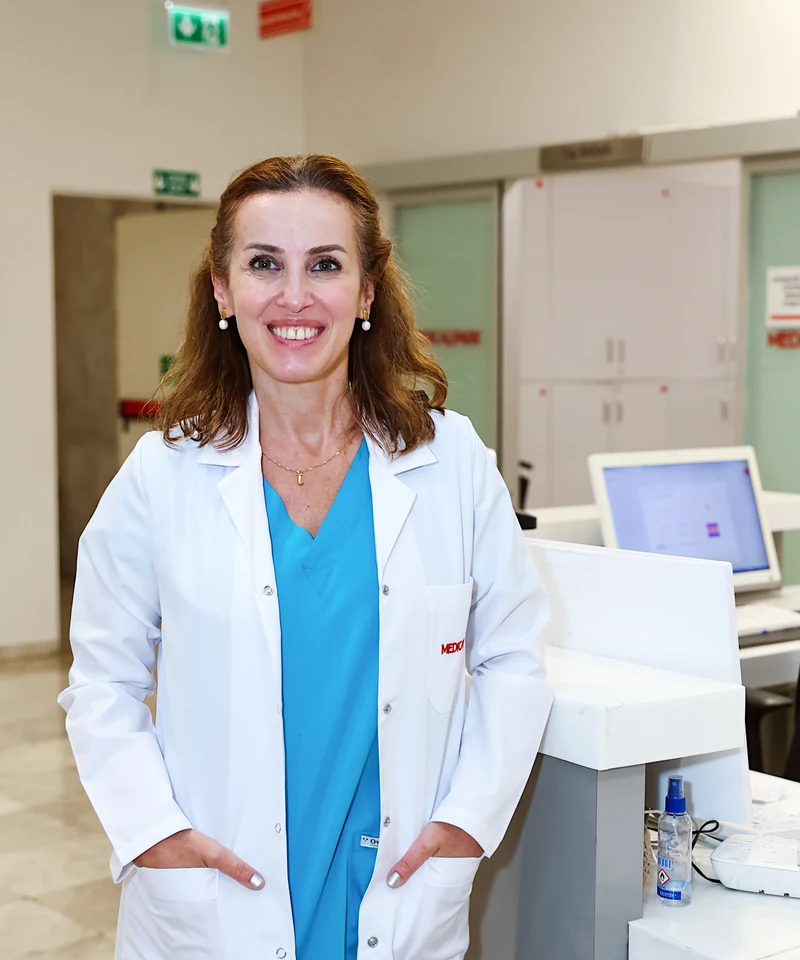
As a specialist with academic work on IVF and infertility, Op. Dr. Ayşet Jane Özcan evaluates the couple's history, hormone profile and imaging together. The treatment plan always begins with the least invasive method and is built step by step, tailored to you.
On this page you will find the causes of infertility, the tests used for diagnosis, the treatment options and answers to common questions. Our aim is to inform you accurately at every stage and to support your hope with science.
Infertility is the failure to conceive within a certain period despite regular, unprotected intercourse. For couples under 35 this period is one year; for women aged 35 and over it is six months. These timeframes help determine when medical evaluation should begin.
Infertility is a very common condition affecting a significant proportion of couples worldwide. It is important to know that you are not alone. Modern reproductive medicine has advanced enough to offer many couples the chance to become parents.
A key misconception is the belief that infertility is always due to the woman. In reality, the causes are distributed roughly equally between female, male and both partners, which is why assessment is always carried out as a couple.
Infertility may be due to female, male or combined factors. In some cases pregnancy does not occur even though all tests are normal; this is called 'unexplained infertility'. Identifying the cause correctly is the key to directing treatment effectively.
The most common female causes are ovulation disorders, blocked tubes and structural problems of the uterus. Male causes are related to problems with sperm count, motility or morphology.
Assessment begins with a detailed history of the couple. Menstrual pattern, previous pregnancies, surgeries, past infections and lifestyle are discussed. Complementary tests are then planned for both the woman and the man.
In the woman, blood tests showing ovarian reserve and hormonal balance (AMH, FSH, LH, TSH, prolactin) are performed along with imaging of the uterus and tubes. In the man, semen analysis is the basic test.
The main tests frequently used include:
The results of these tests are brought together to draw up a treatment roadmap best suited to the couple's situation.
The core principle in infertility treatment is to start with the least invasive method possible. Many couples conceive with simple treatments; in more complex situations, advanced methods such as IVF are used. The plan is always individual.
Lifestyle changes are often the first step: reaching a healthy weight, stopping smoking and alcohol, and taking folic acid and any necessary vitamins increases the chance of success. These changes also support the effectiveness of more advanced treatments.
Treatment usually progresses through the following steps:
With her academic work on ovulation induction, Op. Dr. Ayşet Jane Özcan offers an evidence-based approach, particularly for patients with ovulation problems.
Infertility treatment is not only a medical process but also an emotional journey. Transparent communication, realistic expectations and continuous support are therefore very important. Knowing what is being done and why at each step makes the process more manageable.
Throughout treatment, egg development is monitored with ultrasound and hormone tests, and timing is carefully planned. Side effects and possible risks are assessed in advance and shared with you. This improves both safety and the chance of success.
Both partners taking part in the process contributes positively, medically and emotionally. Helping you feel that you are not alone on this journey is, for us, an inseparable part of treatment.
Success in infertility treatment depends on many factors, including the woman's age, ovarian reserve, the type of underlying cause and general health. For this reason a single success percentage is not meaningful for every couple; after your assessment, a realistic expectation specific to you is shared.
The woman's age is one of the most decisive factors; egg number and quality decline with age. It is therefore important for couples planning pregnancy not to delay assessment. Early consultation increases options and the chance of success.
Lifestyle also plays an important role. Smoking, being significantly over- or underweight, uncontrolled stress and some chronic conditions can reduce success. Managing these factors is an inseparable part of treatment.
Infertility is not only a medical condition but also an experience with deep emotional effects. Couples can often feel anxiety, disappointment and loneliness. Knowing that these feelings are normal and finding a space where you can share them helps the process to be managed in a healthier way.
Building realistic expectations throughout treatment is important both for keeping hope alive and for softening possible disappointments. Knowing what each step means increases the sense of control and reduces the stress created by uncertainty.
Both partners experiencing the process together strengthens the bond between them and improves adherence to treatment. Helping you feel that you are not alone on this journey is, for us, as important as the medical side of treatment.
Some steps you take before beginning an infertility assessment can positively affect the chance of success. Reaching a healthy weight, eating a balanced diet and doing regular light exercise support both hormonal balance and general health.
Stopping smoking and alcohol has a positive effect on both female and male fertility. Starting folic-acid supplementation before pregnancy supports the healthy development of the baby in a possible pregnancy.
When coming to your first consultation, it is valuable to bring any previous tests, semen-analysis results and details of your medications. This information allows the process to be planned more quickly and accurately.
Our approach to infertility treatment is based on a scientific, step-wise model that treats every couple as unique. Our aim is to bring you to your goal with the least invasive and most appropriate method possible.
Academic work on IVF and ovulation induction provides an evidence-based perspective, especially in ovulation problems and complex cases. International experience and keeping up with current scientific developments place your treatment decisions on a strong foundation.
Throughout the process, transparent information, realistic expectations and continuous support are our priority. Answering your questions at every stage and making you a partner in informed decisions is at the centre of our approach.
In an infertility assessment, the male factor is at least as important as the female one and should not be overlooked. About one third of cases are directly due to the man; performing a semen analysis at the start of the process is therefore critical for correct guidance.
A semen analysis evaluates sperm count, motility and morphology. If the results are outside normal limits, a repeat test and, when needed, further evaluation in cooperation with urology are planned. Lifestyle changes can, in some cases, positively affect sperm parameters.
When the male factor is significant, methods such as microinjection (ICSI) can provide high success. For this reason, assessing the couple together and involving both partners in the process is a core principle of treatment.
A woman's age is one of the most important factors affecting fertility. Women are born with a set number of eggs, which declines with age, and egg quality also falls over time. This is why it is important for couples planning pregnancy not to delay assessment.
This should be seen not as a source of pressure but as information that supports informed decisions. Early assessment increases options and the chance of success, and allows fertility-preservation methods such as egg freezing to be considered in good time when needed.
In men, age can also affect sperm quality to some extent, though usually less markedly than in women. Assessing as a couple ensures all factors are considered together.
Intrauterine insemination (IUI) is a treatment in which prepared sperm is placed directly into the uterus around the time of ovulation. It may be preferred when the tubes are open, in mild male factor or in unexplained infertility.
The process usually begins with ultrasound monitoring of ovulation; medication to support ovulation is used when needed. At the right time, sperm is placed into the uterus in a short, painless procedure. You can return to daily life immediately afterwards.
IUI is simpler and less invasive than IVF. If it is not successful after a few attempts, advanced methods such as IVF can be considered.
Consecutive pregnancy losses are difficult for couples, both medically and emotionally. Recurrent pregnancy loss is a situation that requires separate evaluation, and the underlying causes should be investigated.
Assessment looks at hormonal factors, structural causes involving the uterus, clotting disorders and genetic factors. Some causes are treatable, for example, an intrauterine problem can be corrected with hysteroscopy. An accurate diagnosis supports a healthier subsequent pregnancy.
One of the biggest challenges on the infertility journey is the inaccurate or incomplete information circulating online and among acquaintances. Every couple's situation is unique, so someone else's experience or general percentages may not apply directly to you.
Building realistic expectations is important both for keeping hope alive and for softening possible disappointments. This means the process advances step by step, starting with the least invasive method. What can be expected at each stage is shared clearly.
A scientific, transparent approach places your decisions on a solid foundation. Knowing what works and what does not, and why a particular method is recommended, increases your sense of control during the process.
Our aim is to make you not just a recipient of treatment but an informed partner in your own health journey.
Couples under 35 are advised to seek help after one year of trying without success, and women aged 35 and over after six months. If there is menstrual irregularity, a past infection or a known problem, you should be seen earlier.
No. Causes are distributed roughly equally between female, male and both partners, with some due to unexplained causes. Assessment is therefore always carried out as a couple, and a semen analysis is requested for the man.
For women with ovulation problems, it is treatment with tablets or injections that stimulate egg development. The process is managed with ultrasound and hormone monitoring, and the best timing for pregnancy is planned.
AMH is a blood test that gives an idea of ovarian reserve. Low values may indicate a reduced egg supply, but alone they do not determine the chance of pregnancy. It is interpreted together with age, hormone profile and other tests.
Duration depends on the cause and the chosen method. Some couples succeed with a few months of simple treatment, while others may need advanced methods such as IVF. The plan is always individual and shared at the first consultation.
Yes. Reaching a healthy weight, stopping smoking and alcohol, eating a balanced diet and managing stress positively affect fertility and improve the success of treatments. These changes are often the first step of treatment.
When pregnancy does not occur despite normal tests, methods such as ovulation induction and insemination may be tried; if these are unsuccessful, IVF is considered. This process is also planned individually.
Protecting your health at every stage through regular follow-up and early diagnosis.
Learn more
One step closer to parenthood with the latest methods and patient-focused care.
Learn more
Small incisions, less pain and a fast return to daily life.
Learn moreContact us to book an appointment, learn about your treatment or get an expert opinion.